Top 10 Richest Forex Traders in the World 2026

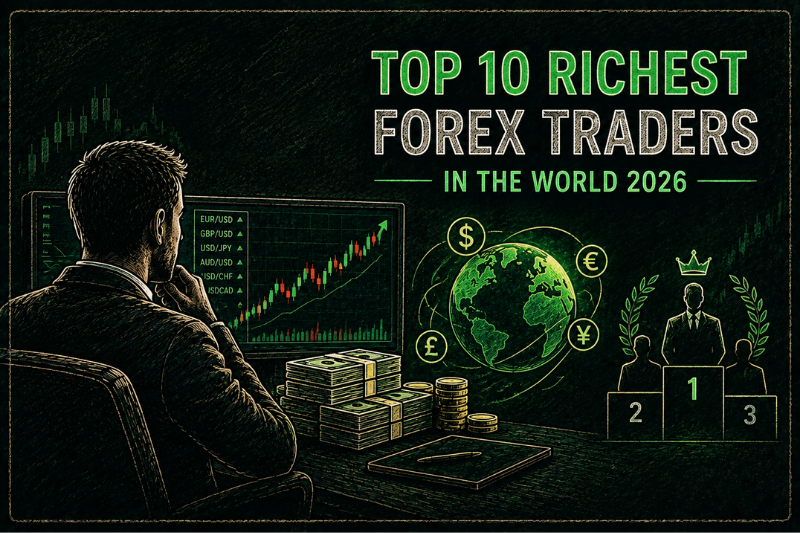
Forex trading, also known as foreign exchange trading, is the world's largest and most liquid market and has shaped traders who have built extraordinary fortunes and secured their place in trading history.
Figures like George Soros, Bill Lipschutz, and Stanley Druckenmiller became icons through their discipline, strategy, and ability to manage risk under pressure.
In this article, we'll explore the richest and most famous forex traders in history, their unique approaches to the market, and the timeless lessons every trader can learn from their journeys.
Key Takeaways
- George Soros, Stanley Druckenmiller and Bill Lipschutz are among the richest forex traders in the world, with fortunes ranging from a few hundred million dollars to more than $8 billion.
- Every trader on this list built lasting wealth the same way, a defined strategy, strict risk management, and the discipline to protect capital before chasing profit.
The Richest and Most Successful Forex Traders
While the global foreign exchange market turns over trillions of dollars daily, only a select group of traders have mastered its immense volatility to build multi-billion-dollar fortunes.
The most successful forex icons didn't achieve elite status through luck, they combined macroeconomic insight, decisive conviction, and strict risk management to capitalize on massive market shifts.
1. George Soros: The Man Who Broke the Bank of England
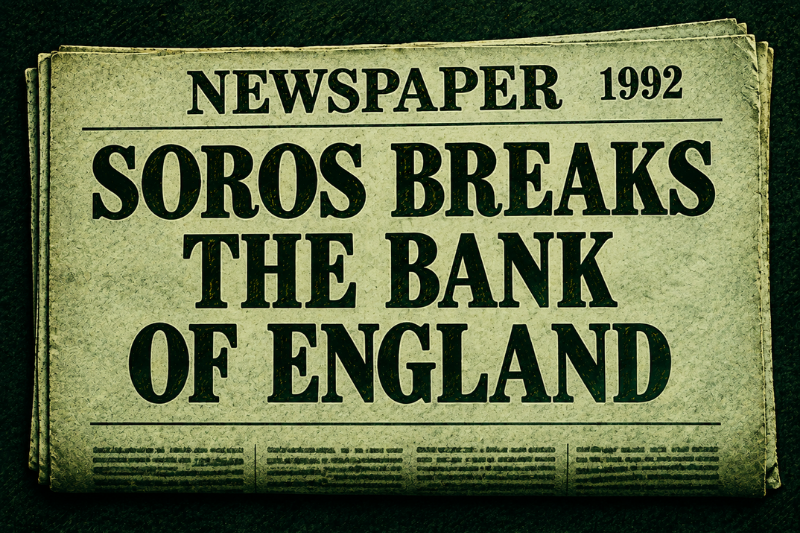
No list of the most successful forex traders is complete without George Soros. He is famous for his legendary short position against the British pound on Black Wednesday (16 September 1992), which earned him $1 billion in a single day and gave him the nickname “the man who broke the Bank of England.”
Trading Philosophy
George Soros’ philosophy is rooted in reflexivity, the idea that markets can influence economic fundamentals as much as fundamentals influence markets.
Through Soros Fund Management and the Quantum Fund, Soros mastered macroeconomic analysis, studying global interest rates, political events, and investor sentiment to place high-conviction trades.
With an estimated net worth of over $8 billion, Soros remains one of the richest forex traders of all time. His lesson is to stay adaptive, challenge conventional wisdom, and never underestimate how quickly currency trading can shift when central banks intervene.
2. Paul Tudor Jones: Combining Fundamentals and Technical
Paul Tudor Jones, founder of Tudor Investment Corporation, became famous for predicting the 1987 stock market crash, making over $100 million. While not known for one major currency trade like Soros, he consistently profited from interest rate fluctuations and macro trends in the forex market.
Trading Philosophy
Paul’s trading style blends technical analysis with global fundamentals, analysing price charts while watching economic signals.
He insists the most crucial aspect of trading is protecting capital through strict risk management. With a net worth of around $7 to $8 billion, he shows that combining trading strategies with discipline leads to significant gains.
3. Bill Lipschutz: The Sultan of Currencies
Bill Lipschutz turned a $12,000 inheritance into millions before running Salomon Brothers' FX desk in the 1980s, where his team generated close to $300 million annually. His exact net worth is not publicly disclosed, with estimates ranging from several hundred million to just over $1 billion, but his influence on the forex market is undeniable.
Trading Philosophy
Known as the “Sultan of Currencies,” Lipschutz emphasized that forex trading is as much about psychology and sentiment as it is about technical or fundamental analysis.
Lipschutz's main lesson for traders is that success in the forex market comes not from chasing wins but from managing losses, controlling emotions, and adapting to market sentiment.
4. Stanley Druckenmiller: Conviction and Discipline
Stanley Druckenmiller is a legendary macro investor known for achieving an estimated 30% annualized return with no losing years while running Duquesne Capital Management from 1981 to 2010.
Working alongside Soros at the Quantum Fund, Stanley Druckenmiller played a critical role in the 1992 pound short. Later, as head of Duquesne Capital Management, he built a reputation for placing large, highly profitable bets when he had conviction.
Trading Philosophy
Druckenmiller emphasizes capital preservation and the discipline to cut losses quickly. He also shared that George Soros taught him that position sizing accounts for larger sizes of success; it is about how much you make when you are right versus how much you lose when you are wrong.
His story is a reminder that even the most successful forex traders prioritize defense before offense. With a fortune above $6 billion, he stands among the richest forex traders ever.
5. Michael Marcus: From $30k to $80 Millions
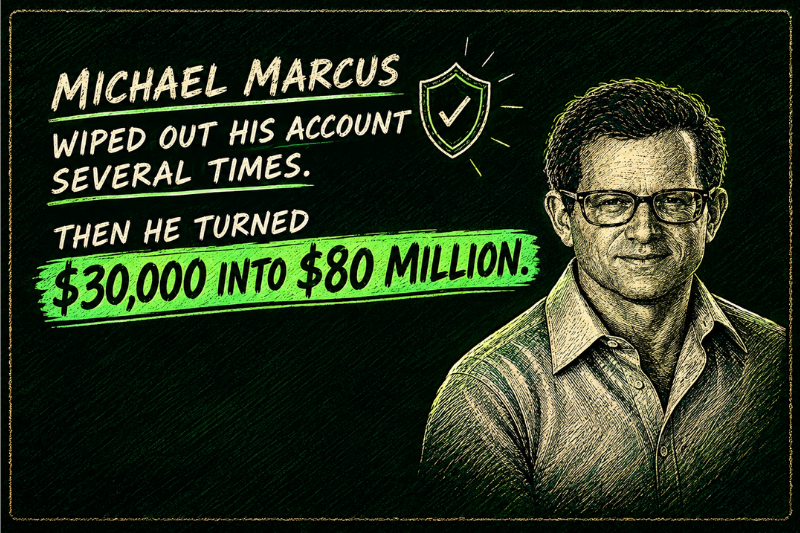
Michael Marcus began his trading career with only $30k and eventually turned it into tens of millions. He later mentored future billionaire hedge fund manager Bruce Kovner, proving that knowledge and mentorship are as valuable as money in this business.
Trading Philosophy
As a member of Commodities Corporation, he specialized in futures and currencies, relying on technical analysis and disciplined rules. He emphasized focusing on capturing large, sustained moves driven by institutional money rather than predicting market tops and bottoms. Risk management was another crucial aspect of his trading philosophy, where he mentioned limiting exposure on any single trade to protect capital from catastrophic losses.
His success shows that even small beginnings in the trading industry can lead to great wealth when paired with discipline and risk control.
6. Bruce Kovner: The Risk Manager
A student of Marcus, Bruce Kovner borrowed $3,000 on a credit card for his first trade and turned it into $20,000. He went on to found Caxton Associates, which became one of the most profitable hedge funds of its time.
Trading Philosophy
Kovner's strength was blending technical timing with a deep understanding of economic fundamentals while keeping risk strictly controlled. He has always emphasized that survival is more important than quick wins, making him a role model for successful trading.
By pre-determining exact exit points, capping trade risk at 1% to 2% of total equity, and practicing under-trading, he seeks to eliminate emotional interference and prevent catastrophic losses.
7. Andrew Krieger: The Aggressive Currency Trader
Few forex traders are remembered as clearly as Andrew Krieger. In 1987, after the Black Monday crash, he saw weaknesses in the New Zealand dollar and launched a massive short position that even exceeded the country's money supply.
The trade earned his firm over 300 million dollars and made Krieger known as one of the most aggressive yet calculated forex traders of his time.
Trading Philosophy
Krieger's approach was rooted in macroeconomic analysis, targeting currencies he believed were overvalued. To maximize the impact of these plays, he utilized currency options as potent strategic tools, allowing him to control unprecedentedly large positions while maintaining a defined boundary on his capital risk.
His story shows both the potential rewards and the dangers of using extreme leverage in forex trading.
8. Joe Lewis: From Currencies to Billionaire Investor
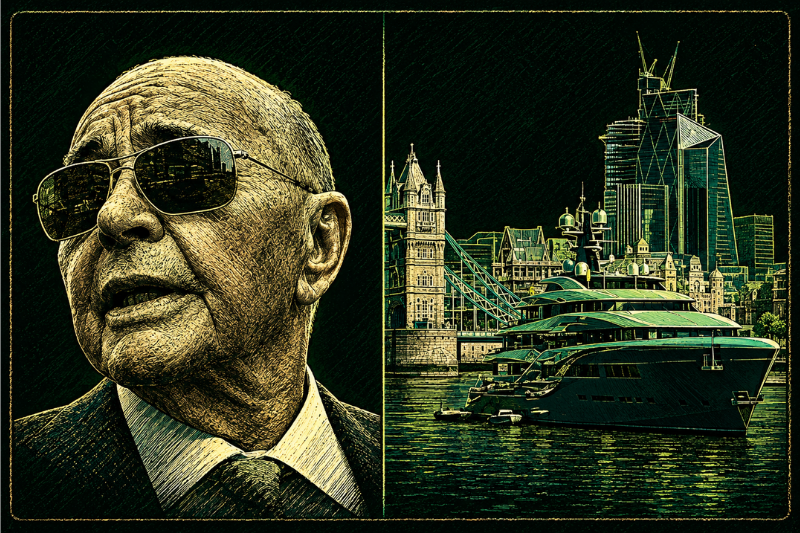
Born in London, Joe Lewis built his wealth initially through currency trading. He partnered with George Soros during the 1992 European Exchange Rate Mechanism crisis, profiting when the British pound collapsed.
Reports suggest Lewis personally made around $1.8 billion from that trade alone. His current net worth is estimated to be around $6.9 billion.
Trading Philosophy
Joe Lewis's core trading philosophy centered on executing highly concentrated, massive-scale bets when macroeconomic factors created an absolute misalignment in asset pricing. He completely rejected the traditional idea of broad diversification, preferring instead to wait patiently for rare, generational market opportunities where he could deploy immense capital with maximum force.
Lewis later diversified into real estate, sports, and other investments, becoming the owner of the Tavistock Group and a majority shareholder in Tottenham Hotspur. Despite moving beyond the forex market, he remains one of the richest forex traders in history, proving how early success in FX can fuel wider financial empires.
9. Marty Schwartz: The Technical “Pit Bull”
Marty Schwartz, nicknamed “Pit Bull,” became famous as a short-term trader who relied heavily on price charts and strict rules. After winning the U. S. Investing Championship in 1984, Schwartz cemented his reputation as one of the top forex traders and futures traders in the world.
After spending a decade losing money trying to prove his fundamental theories right, he finally shifted his entire methodology exclusively toward technical analysis, choosing to follow where prices were actually going rather than predicting where they should go.
Trading Philosophy
Featured in Market Wizards, Schwartz emphasized discipline and the importance of sticking to tested trading strategies. By consistently following technical setups and applying strong risk management, he turned steady trades into millions.
Schwartz famously declared that he became a winning trader only when he swallowed his pride and realized that making money was vastly more important than being right.
His story shows that successful trading doesn't always come from massive one-off bets; consistency can be just as powerful.
10. John Taylor: Founder of FX Concepts
John Taylor, founder of FX Concepts, was a pioneer in quantitative currency trading. Starting as a analyst at Chemical Bank in the 1970s, he developed early computer models to analyze and exploit foreign exchange trends.
He went on to build FX Concepts into one of the world's premier currency-focused hedge funds, managing billions of dollars at its peak.
Trading Philosophy
Taylor’s core philosophy relied on data-driven, systematic models rather than purely discretionary gut feel. He emphasized that removing human emotion through systematic trend-following and cyclical modeling is essential for long-term survival in the volatile forex market.
His work helped shape modern algorithmic foreign exchange trading.
The richest forex traders succeeded through discipline and strategy. Top One Trader provides the tools to follow their path with flexible funded accounts, educational content, and advanced trading platforms.
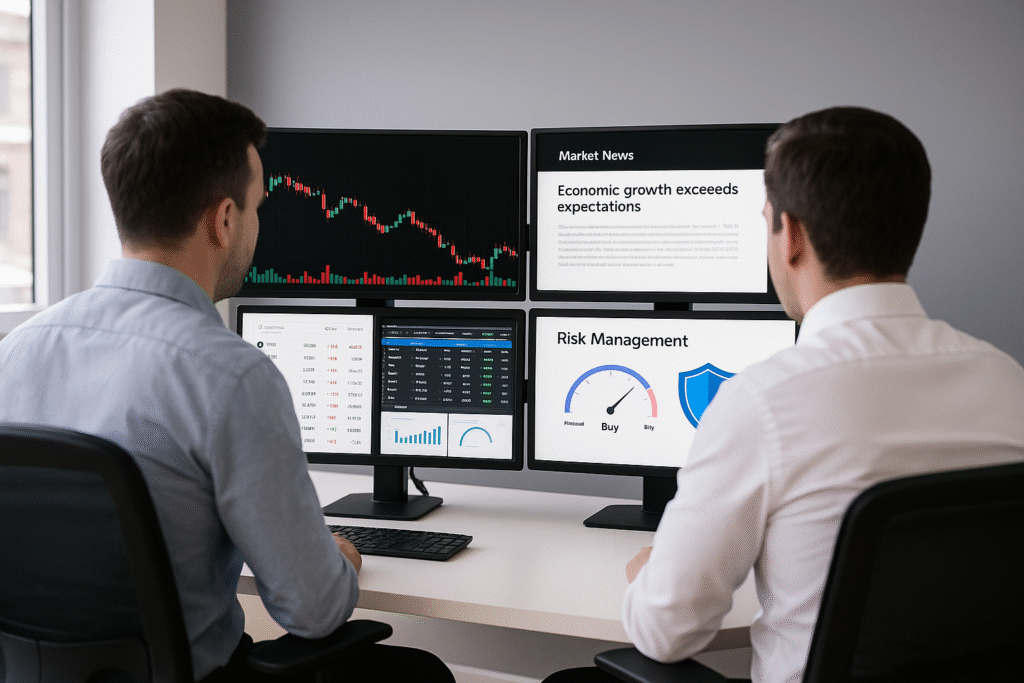
Lessons from the Richest Forex Traders
Bottom Line
The richest forex traders and legendary investors prove that there is no single path to success in the financial markets. Some, like George Soros and Bill Lipschutz, relied on currencies as their primary investment vehicles.
In contrast, others, such as Warren Buffett and Ray Dalio, built fortunes in different markets but still turned to forex when opportunities arose. What unites them all is not luck but discipline, risk control, and the ability to stick to a proven strategy.
For aspiring traders, the lesson is simple to build an edge, protect your capital, strengthen your mindset, and stay consistent over time. Success in forex and in any market comes from patience, adaptability, and applying these principles day after day.
Inspired by the journeys of legendary forex traders? Start building your own success story with Top One Trader. Choose a funded account that fits your trading style and take the first step toward reaching your goals.
Frequently Asked Questions
Who is the richest forex trader in the world?
George Soros is widely considered the richest forex trader, with an estimated net worth of over $8 billion.
Can you become a millionaire trading forex?
Yes, but it typically requires a proven strategy, disciplined risk management, and consistent execution over many years.
What trading style do the world's richest forex traders use?
They use different styles, including global macro, technical analysis, and systematic trading, with strict risk management being the common factor.
How much did George Soros make from breaking the Bank of England?
George Soros reportedly made about $1 billion from his 1992 short position against the British pound.
How much money do professional forex traders make?
Professional forex traders can earn substantial profits, but income varies widely based on capital, strategy, risk, and market conditions.
-1%201%20(1).webp)