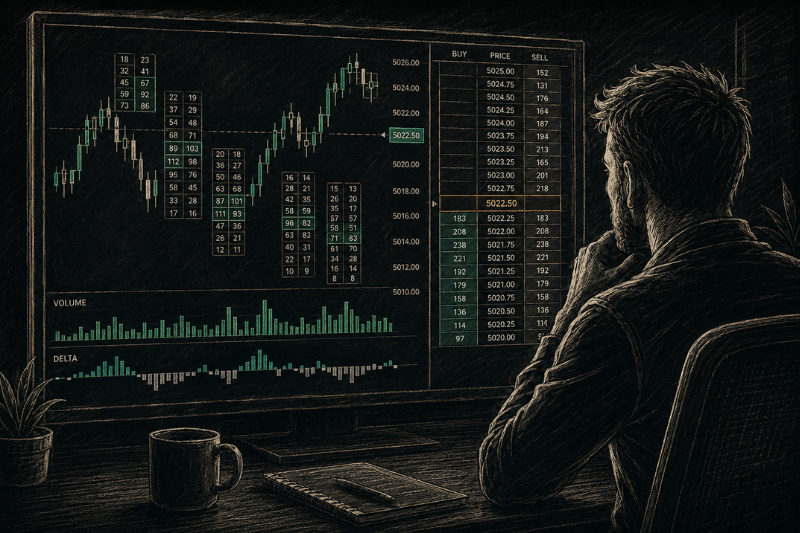
What Is Slippage in Trading? How Traders Can Manage It


Slippage is something most traders experience early on, even if they don’t know what to call it yet. You place a trade at a price that looks clear on the chart, but when the order is filled, the execution shows a slightly different level. Sometimes it works in your favour, other times against you. This difference is known as slippage.
Slippage is not an error, and it isn’t unique to beginners. It’s a normal part of trading financial markets, and understanding it helps traders manage risk and expectations more realistically.
Key Takeaways
- Slippage occurs when the execution price differs from the expected price
- It is caused by market speed, volatility, and liquidity, not by faulty execution
What Is Slippage in Trading?
Slippage is the difference between the price you expect and the actual execution price you receive when a trade is filled.
In financial markets, prices keep moving as buyers and sellers interact. Under normal conditions, when you place an order, for example, buying 1 lot of EUR/USD at a specified price, there should be enough opposite orders at that same level. When supply and demand match, your trade is filled at the desired price.
However, this balance does not always exist. In fast or unstable conditions, there may not be enough liquidity at the intended price. When that happens, your order can be filled at the next available level, which may be a higher price or a lower price. That difference is what is known as slippage.
Slippage can occur on entries, stop losses, and take profits. Market orders are the most exposed because they prioritise speed, so they are more vulnerable during high volatility.
Stop orders and limit orders can also experience slippage. Once a stop level is reached, the order turns into a market order and is executed at the next available price, not necessarily the exact level you specified.
It is also important to understand that slippage is not always negative.
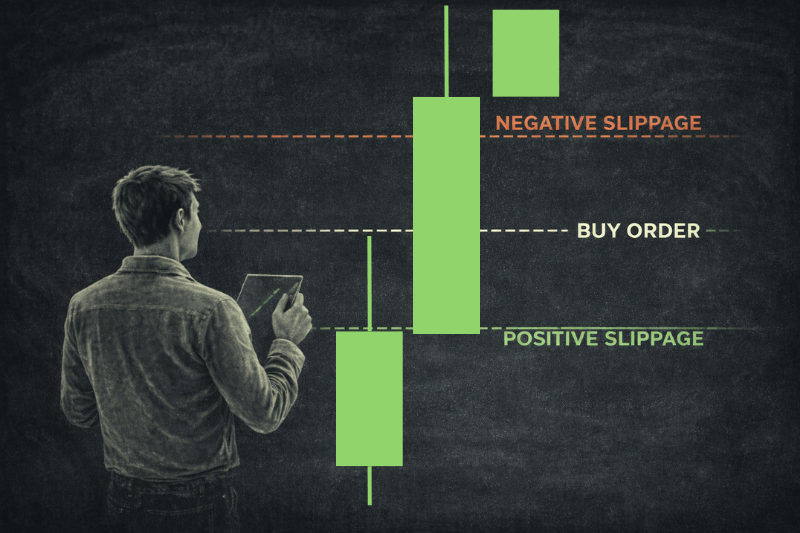
- Negative slippage occurs when your trade is filled at a worse price than expected. For example, a stop loss on a long position may be triggered during a rapid move, closing the trade lower than planned.
- Positive slippage occurs when the order is executed at a better price than anticipated. For example, a take profit may be filled above the target during a sharp move, giving extra profit.
Slippage results from real market conditions and how orders are matched.
Want to trade with a funded account?
Top One Trader provides you with the right trading environment and gives you access to multiple challenge types to choose from, with low spreads and commissions, a wide range of asset classes, and educational content to support you as a trader.
Why Does Slippage Happen?
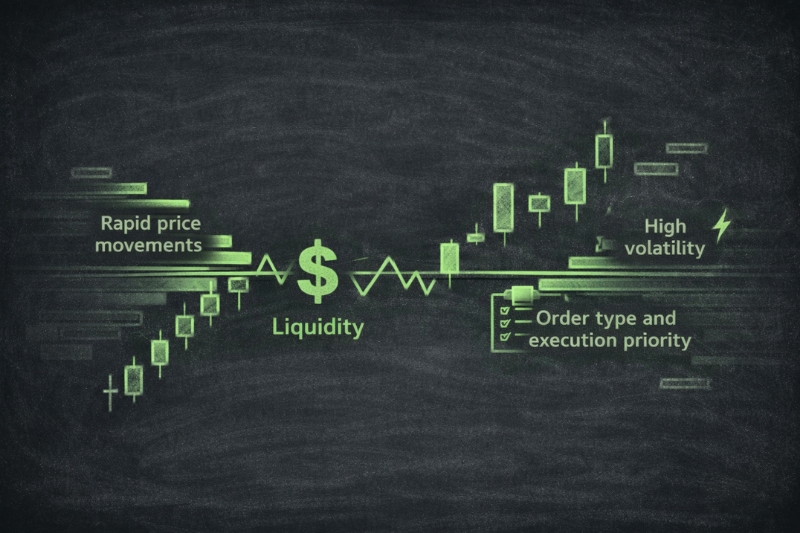
Slippage happens because the market continues to move while orders are being processed.
When a trader places an order, the price is not locked in place. The order has to be routed, matched, and executed against available buyers or sellers. If price changes during that short process, the final execution price can differ from the originally expected price.
Several factors influence how often this happens and how large the price difference becomes:
Rapid price movements
The most direct cause of slippage is speed
In fast-moving conditions, prices can change in fractions of a second. During these moments, the price level a trader aims for may no longer be available by the time the order reaches the market. When this happens, the order is filled at the next available price instead of the desired price.
This is why traders are more likely to experience slippage during sudden moves, strong breakouts, or sharp reversals. The faster price moves, the higher the chance that execution will occur at a different level.
Liquidity and available orders
Liquidity refers to how many buyers and sellers are active at different price levels.
In liquid markets, there are usually many orders close to the current market price. This allows trades to be executed smoothly with minimal price difference. In low-liquidity conditions, however, available prices can be spread further apart.
When liquidity is low:
- There may be fewer buyers or sellers near the current price
- Orders are matched at the next available level
- Price gaps between executions become more likely
Low liquidity doesn’t always mean extreme conditions. It can occur during quiet trading hours, holidays, or outside major market sessions.
Order type and execution priority
Not all orders are treated the same way.
Market orders are designed to ensure execution, not price precision. They accept whatever price is available at the moment the order is filled. This makes them more vulnerable to slippage when prices are moving quickly.
Stop orders behave similarly once triggered. When price reaches the stop level, the order converts into a market order and is filled at the best available price. If price moves sharply through that level, slippage can occur.
This is not a flaw in the order system. It is a trade-off between certainty of execution and control over price.
Slippage is a market effect, not manipulation
A common misconception is that slippage is caused by intentional interference or platform issues. In reality, slippage is driven by market conditions that are beyond the control of any single participant.
Slippage results from:
- Continuous price movement
- Available liquidity at execution
- The time it takes for orders to be matched
These factors exist in all active financial markets. Even with modern technology and fast execution, price can still move faster than orders can be filled during volatile conditions.
Main causes of slippage at a glance
When Does Slippage Happen and Under Which Conditions?
Slippage does not occur all the time. In most situations, trades are executed close to the expected level. It becomes noticeable when market conditions change, and price behaviour turns unstable.
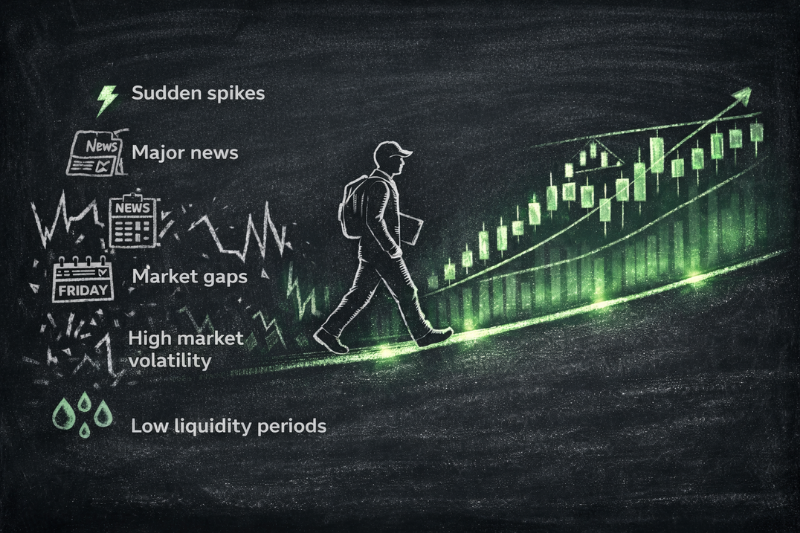
Slippage tends to happen more often when traders try to execute orders during moments when the market is reacting faster than usual. In these situations, the price visible on the chart is not always the specified price that is actually available for execution.
You will typically notice slippage under the following conditions:
- Major news events, such as interest rate decisions or economic data releases
- Periods of high market volatility, where price moves rapidly
- Moments when market gaps form and price skips levels
- Low liquidity periods are often reflected by lower trading volume and fewer active participants
- Sudden spikes caused by large orders hitting the market
Slippage is not about good or bad timing. It is about market conditions and how quickly price adjusts to new information.
How to Avoid Slippage and Minimise Its Risks
When you trade, you have to accept that slippage occurs. It cannot be eliminated, but it can be managed through a solid trading plan and effective risk management, especially in dynamic markets.
Best practices to manage slippage
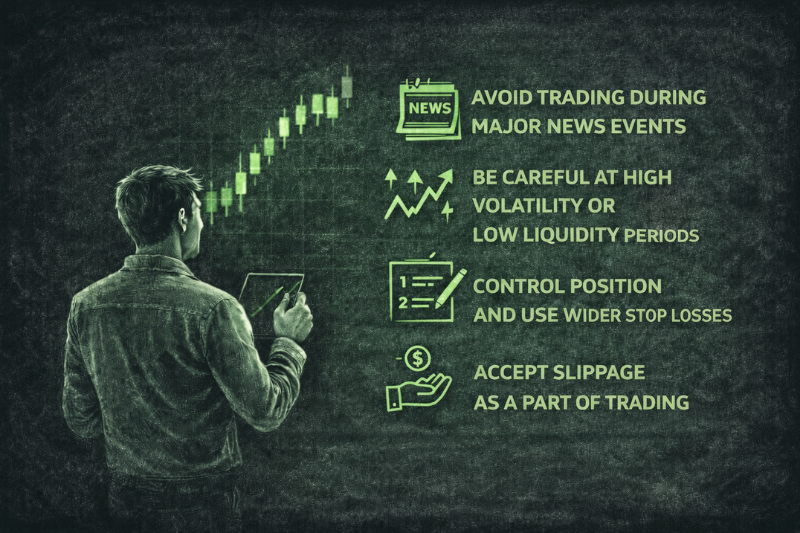
- Build a solid trading strategy that has a real edge. A strategy that performs well over time helps absorb execution differences caused by market fluctuations, without breaking down during fast-moving markets.
- Apply strict risk management. When position size is controlled, even if negative slippage happens, the account is better protected from significant losses.
- Position sizing plays a big role here. Larger positions amplify the slippage effect, while smaller, controlled sizes make execution differences easier to absorb. This becomes critical during periods of heightened volatility.
- Choose markets wisely. You can trade different asset classes such as the forex market, stocks, indices, commodities, or crypto. What matters most is avoiding illiquid markets and focusing on instruments with sufficient liquidity and stable conditions, where execution is more likely to occur at a better price or even a favorable price.
- This also applies to timing and market conditions. Avoid trading during high-impact news events and during low-liquidity sessions. Low volatility markets generally provide more predictable execution and lower slippage risk.
- Use reasonable and slightly wider stop losses to give trades room to breathe. Stops that are too tight are more exposed to sudden price spikes caused by market fluctuations.
- Choose realistic entries and targets. Do not rely on perfect fills or exact levels.
- When slippage does occur, avoid revenge trading after a loss. Accept it and move on. Emotional reactions increase risk and reduce the quality of informed trading decisions.
Final Thoughts
Slippage is a natural part of trading markets. It happens because prices move, liquidity changes, and market volatility can increase without warning. While traders cannot control how fast the market moves, they can control how they respond to it. Strong risk management can protect traders from turning normal execution issues into serious problems.
By trading in liquid conditions, sizing positions carefully, and setting realistic expectations, traders reduce the impact of excessive slippage and stay focused on long-term consistency rather than perfect execution.
Ready to test your strategy under real market conditions?
Top One Trader gives you access to multiple funded account options with clear rules, provides advanced platforms, and educational resources to support your trading journey.
FAQ
What are the main reasons slippage happens?
Slippage occurs due to rapid price movement, high volatility, or low liquidity when there are not enough orders available at a specific price level.
Does slippage mean there is a problem with the platform?
No. Slippage is usually caused by market movement and available liquidity, not by platform errors.
Why do stop-loss orders experience slippage more often?
When triggered, stop-loss orders execute at the next available price. If price moves quickly, the exact stop level may not be available.
Is slippage always negative?
No. Slippage can be positive or negative depending on how price moves during execution.
Can traders completely avoid slippage?
No. Slippage cannot be eliminated, but trading liquid markets and managing risk can reduce its impact.
-1%201%20(1).webp)